I Bought a Used Party Bike Fleet. Here's What I Wish I Knew.
Last year I bought three used party bikes to launch a pedal pub tour business in a mid-size Southern city. Two of those bikes were great purchases. One of them was a very expensive lesson. Here's everything I learned so you don't repeat my mistakes.
Why I Went Used Instead of New
New party bikes run anywhere from $30,000 to $55,000 depending on the manufacturer, seat count, and whether you want the electric assist motor. When you're starting a business and need three or four bikes to run a viable schedule, that's $120K+ before you've booked a single tour.
Used bikes in decent shape go for $15,000 to $30,000. That's a meaningful difference when you're also paying for insurance, permits, a storage location, and marketing. Going used let me launch with three bikes instead of one, which meant I could offer multiple daily tours from day one.
What I Got Right
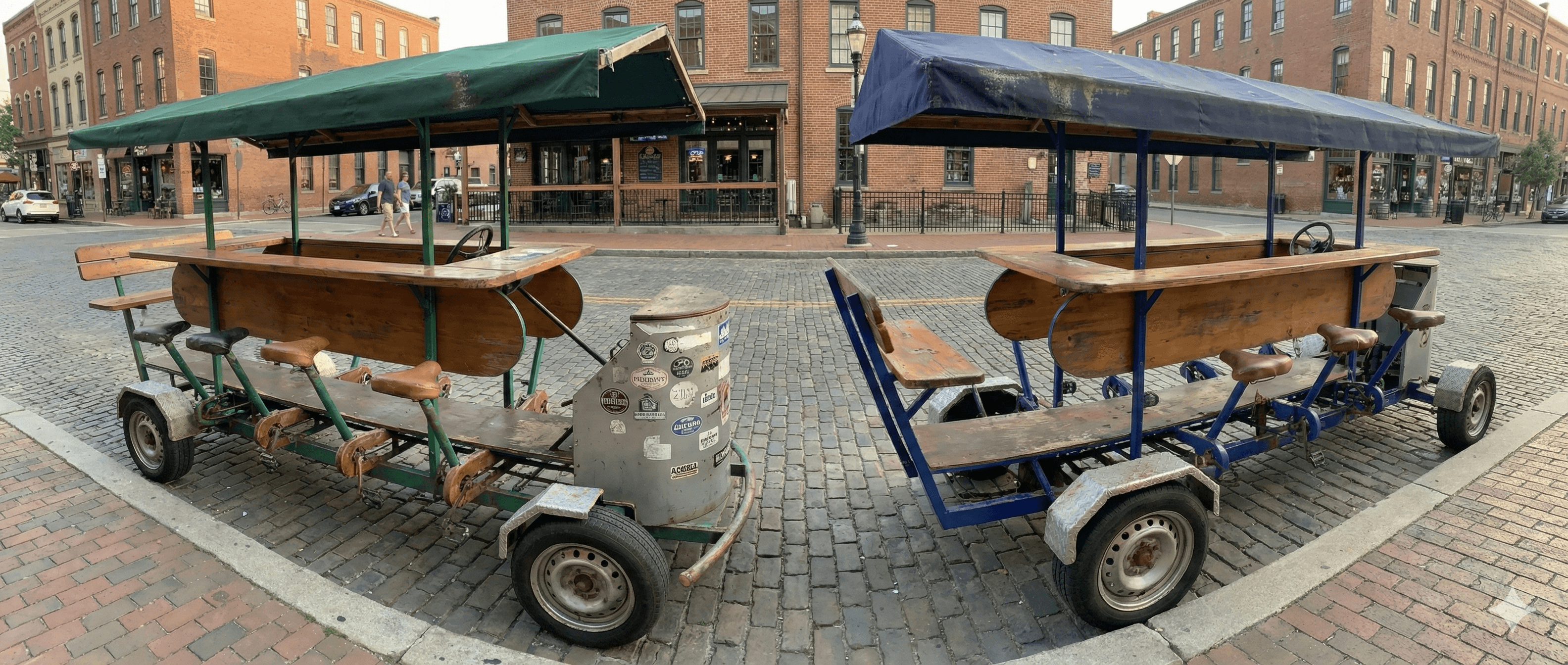
I flew out to inspect two of the bikes in person. This is non-negotiable for a purchase this size. Photos lie. Listings are optimistic. You need to see the frame welds, sit in the seats, test the steering, and check the braking system yourself.
I asked for maintenance records and actually read them. The two good bikes came from an operator in Nashville who kept meticulous records. Oil changes on the assist motor, brake pad replacements, chain tension logs, the works. That paperwork told me more than any test ride could.
I negotiated a package deal. When you're buying multiple units from the same seller, there's always room to negotiate. I saved about $4,000 by buying both Nashville bikes together instead of individually.
What I Got Wrong
I bought the third bike based on photos and a phone call. The seller was in Ohio, and I convinced myself the 14-hour drive wasn't worth it for a bike that "looked great in the pictures." Big mistake.
When it arrived, the frame had a hairline crack near the steering column that was hidden under a fresh coat of paint. The seats were sun-damaged underneath the covers. And the electric assist motor made a grinding noise that the seller conveniently never mentioned.
That bike cost me $18,000 plus $2,200 in shipping, and I've since put another $4,500 into repairs. For that money, I could have bought a much nicer unit.
The Inspection Checklist I Use Now
After that experience, I created a checklist that I use (and share with anyone who asks):
Frame and Structure
- Check all welds for cracks, especially at stress points near the steering and pedal stations
- Look for rust underneath, not just on the surface
- Verify the frame is straight by checking wheel alignment
- Bounce each corner and check for unusual flex
Drivetrain
- Spin every pedal station and check for smooth rotation
- Inspect chain tension and wear on all chains
- Test the main drive chain under load (have people sit on it)
- Check sprockets for worn teeth
Braking System
- Test brakes on a slight hill with full weight
- Inspect brake pads for remaining life
- Check brake cables or hydraulic lines for fraying or leaks
- Verify the parking brake holds on an incline
Electric Assist (if equipped)
- Check battery age and cycle count
- Run the motor at full load for 10 minutes and listen for grinding
- Verify the charger works and charges to full capacity
- Check all electrical connections for corrosion
Cosmetics and Comfort
- Sit in every seat and check for tears, sagging, or broken brackets
- Test the canopy or roof mechanism
- Check the sound system if included
- Inspect the keg cooler or drink holders for functionality
The Questions You Should Ask Every Seller
Beyond the physical inspection, these questions have saved me from bad deals:
- Why are you selling? Legitimate answers include upgrading the fleet, leaving the market, or downsizing. Vague answers are a red flag.
- How many tours per week did this bike run? This tells you the real usage level. A bike that ran 3 tours a day, 6 days a week has been through a lot more than one that ran weekends only.
- What's been replaced or repaired in the last year? Recent repairs can be a good sign (proactive maintenance) or a bad one (chronic problems).
- Can I talk to your mechanic? If the seller maintained the bike professionally, they shouldn't have any issue connecting you with the shop.
What Used Party Bikes Are Worth in 2026
Based on what I've seen in the market over the past year:
| Bike Type | Age | Condition | Price Range |
|---|---|---|---|
| 6-seat pedal pub | 1-3 years | Good | $22,000 - $32,000 |
| 6-seat pedal pub | 4-6 years | Good | $14,000 - $22,000 |
| 10-15 seat party bike | 1-3 years | Good | $28,000 - $42,000 |
| 10-15 seat party bike | 4-6 years | Good | $18,000 - $28,000 |
| Electric assist add-on | Any | Working | +$3,000 - $5,000 |
These numbers shift based on season and location. Spring prices are higher because that's when new operators are buying. Winter deals can be 15-20% lower if you're patient.
The Bottom Line
Buying used party bikes is absolutely the right move for most new operators. The savings are too significant to ignore. But you have to do your homework, inspect in person, and be willing to walk away from a bad deal.
The two bikes I bought right have been running tours for over a year now with minimal issues. The one I bought wrong is a constant headache. The difference? About $500 in travel costs and two days of my time for an in-person inspection.
Spend the money. Make the trip. Your future self will thank you.
Browse party bikes and pedal vehicles for sale on ListMyFleet.